


[Hi there, Trash Talkers. I started this post long before I learned of Jane Goodall’s passing, but it’s only right that I stop and publish the draft I have today.]
As a grad student in a vast ocean of researchers, I often fantasize about being famous in my field. Very few people can name a famous scientist. If you ask someone to name a famous scientist, a handful of answers usually come up: Stephen Hawking, Bill Nye, Neil DeGrasse Tyson, Isaac Newton, Galileo, and others. (What’s interesting is that Bill Nye is an engineer and a science communicator, but he is not traditionally a scientist in the same way we might think of these other people.)
There are THOUSANDS of scientists who are famous in their respective fields, or even famous to scientists outside their field.
Jane Goodall and her work in primate evolution. Jennifer Doudna and Emmanuelle Charpentier, inventors of the CRISPR-Cas9 gene editing tool. Suzanne Simard, who correctly hypothesized that trees talk to each other. Marie Curie, who paved the way for all women in science. George Church, who pioneered personal genomics (the analysis and interpretation of an individual’s genes). Katalin Karikó, inventor of the mRNA technology used in COVID vaccines (who was actually demoted at the University of Pennsylvania—here’s a particularly enraging account of the incident)1. Tim Berners-Lee, who invented the internet. Read that again. Why don’t you know the name of the guy who invented the internet?
Linus Pauling, who basically discovered everything we know about molecules and is labelled as “the greatest scientist of all time.” Sara Seager, an astronomer so prominent in her field that she received a six-figure grant that has no application process, commonly referred to as the “Genius Grant.” They just call you and say, “Here’s $800,000. Do whatever you want.” Justin Sonnenburg, a world-class researcher of the gut microbiome, whose research I read as a class assignment at another school. Imagine your work being so influential that it is the tool used to teach and mold young scientific minds.
My fluid mechanics professor, Manoj Chaudhury, who has a paper published in Science titled, “How to make water run uphill.” Kip Thorne, Nobel Prize-winning physicist who consulted on the scientific feasibility of Interstellar (The day I get a phone call asking to consult on the science of a movie is the greatest day of my career. But nobody is making movies about cultivated meat, are they?). Paul Erdős, who published so many mathematics papers with so many collaborating authors that there is an index identifying how distant you are from his work: the Erdős number. My partner’s Erdős number is 5. An icon of particular interest to us Trash Talkers is Mark Post, who debuted the world’s first cultivated beef burger, made by growing cow cells with some gelatin in a laboratory. The most expensive burger ever made at 5 oz. and costing over $300,000.
For all of these examples, there are hundreds of thousands of nameless students, technicians, relatives, confidants, colleagues, and friends who shaped their work, consciously or subconsciously. And all of these scientists have been honored in different ways: media features, awards, highly-cited publications, detailed Wikipedia biographies, and other accolades.
And sometimes, people are wrongly credited with being the “first.” The most famous example is Watson and Crick, who mocked and stole critical data from Rosalind Franklin. Jocelyn Bell Burnell, who discovered the first radio pulsars, was shooed off the Nobel Prize awardee list, only for her supervisors to be credited with the discovery.
Today, we need to talk some trash about another wrong “first.” And my scientifically-minded readers will tend to nitpick at the details—all of us tend to identify an angle where a particular study is actually the “first” of something. It usually includes a lot of qualifying statements. “This study is the first to investigate how mice respond to cocaine while obese, while blindfolded, while pregnant, on a Tuesday.” It’s a poor habit of ours.
Science Imitates Art
In 2013, Dr. Mark Post presented the world’s first cultivated beef burger patty on national television.
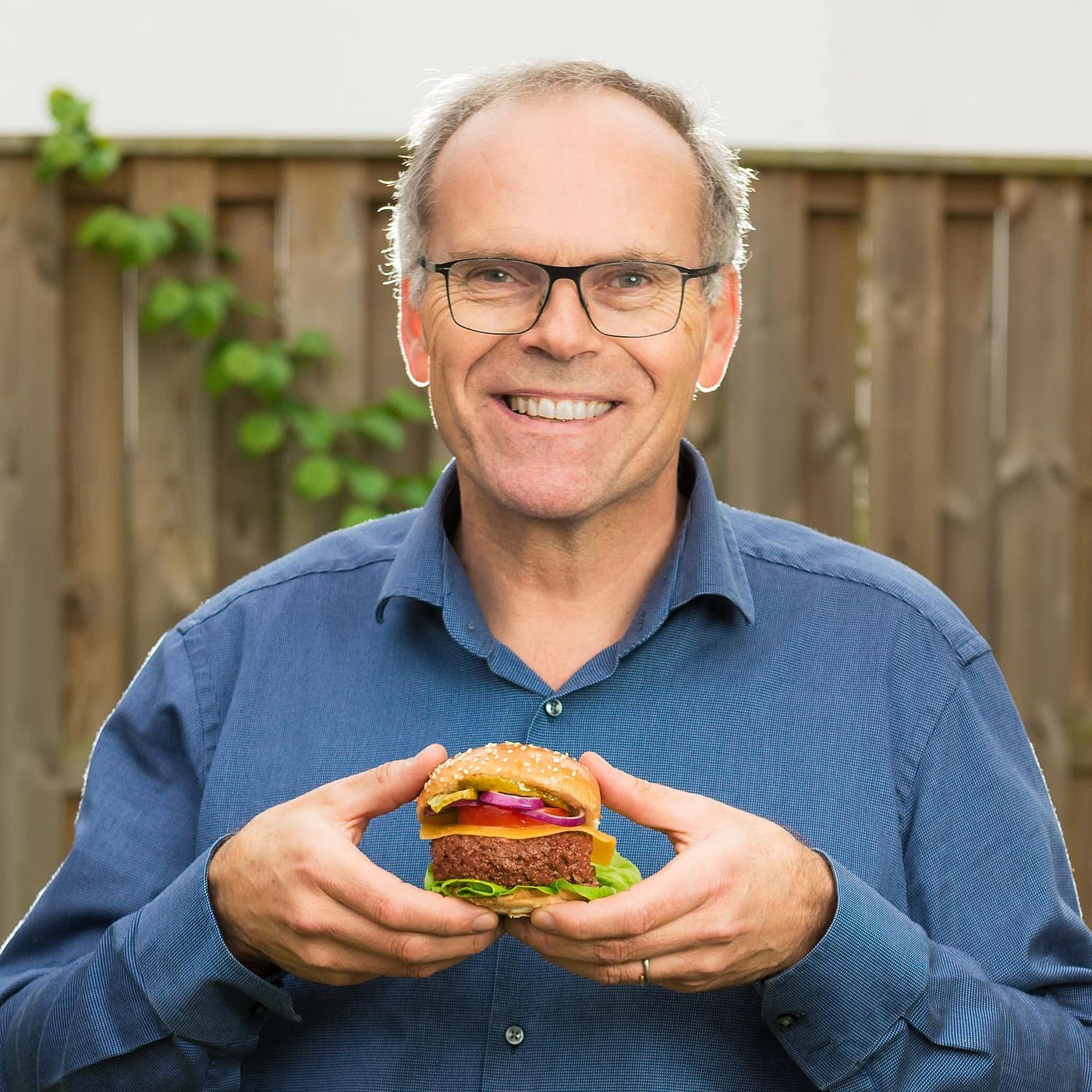
Since then, the field has exploded. There are an estimated 150+ companies globally trying to commercialize cultivated meat across every region. Dozens of cultivated meat conferences occur every year, spanning the United States, the Netherlands, Japan, Singapore, and more. Hundreds to thousands of peer-reviewed publications hit journals ever year. And now, we have regulatory approvals for cultivated meat in the United States and Singapore, with more approvals currently under review in Australia, Thailand, and the UK.
But ten years before that, a pair of artists stepped up to the [dinner] plate to try their own hand at cultivated meat and tissue engineering. In an art installation titled “Disembodied Cuisine,” Oron Catts and Ionat Zurr displayed a makeshift lab in which technicians cultured frog cells into whole tissues and ate them, all in front of a live audience. They actually displayed the live frogs next to the lab until the end of the event, where they released them back into a local pond. The work actually started at Harvard in 2000 and was part of a larger project titled “Semi-living Steaks.”
What’s worse is that this wasn’t the only proof-of-concept cultivated meat study prior to Post’s television debut in 2013. NASA also briefly researched the topic and in 2002, published a paper proving they could grow fish tissue from a small piece of fish fillet and isolated fish cells. The initial idea was to have astronauts grow their own protein in space, reducing the launch weight of spacecraft and providing astronauts with fresh, nutritious food.
How Do We Choose Scientific Icons?
Hopefully I’ve demonstrated to you that not all scientific fame is actually from being the “first” to do something. Of course, you have to do the work to be innovative; you have to ask novel questions and employ novel approaches. But you also have to get a little lucky. Sometimes you’re just in the right place at the right time.
And even if you’re not in the right place at the right time, know that there is other scientific fame. There will be students and colleagues of yours that talk about you and your work when you least expect it. People who love your papers, marvel at your students, and wish to collaborate with you. There are many ways to be honored, ways to be iconic that don’t involve being on national television or featured in Time. You can be a local icon with lots of scientific impact.
I have a lofty goal to publish a textbook once in my lifetime. I’m positioned to do the work—I started researching cultivated meat scaffolding as a college student, only a few years after the birth of the field. I’ve tried to build a network while the field is still somewhat small. And there are still plenty of milestones to meet: publishing my research, graduating, and deciding what kind of job I want.
But man, do I want to publish a textbook! The greatest honor in science is to be referenced, for someone to say, “I trust this person’s expertise and knowledge.” Fennema’s Food Chemistry, a textbook named for the father of food chemistry2. Introduction to Food Engineering by Paul Singh, one of the only food scientists ever inducted into the National Academy of Engineers. Organic Chemistry by Janice Gorzynski Smith—iconic for many reasons. Don Knuth’s The Art of Computer Programming, a computer science textbook so well-written that a cheeky reward of $2.56 (one hexadecimal) is offered for reporting typos.
I have a textbook titled The Butter Industry on my desk that I rescued from the trash can, because how could I not?
There are ways to create scientific impact on much smaller, more meaningful scales, too. Mentoring a junior colleague, teaching a concept using a unique metaphor, asking a meaningful question, even a casual conversation over coffee can create a lifelong memory for someone. None of these are “measurable,” but that does not mean they have no impact.
Another sidenote about Kariko—her discovery about RNA that led to the COVID vaccine was published in 2005. She says she knew at the time that it would lead to something big. It still took 15 years!
Why do we call these people the “Father of X?” Are mothers not those who “give birth” to new things? What happens when a woman is credited with founding a new concept or discipline, will we still call her the “Father of?”
Wow, I simultaneously learned a lot and was laughing to myself the whole way! I could not agree more on how creating scientific impact can take so many different shapes, forms, and scales. I can personally resonate as someone who is not a practicing scientist in the alt protein field, but rather a field catalyzer by supporting the next generation of this field's brilliant workforce (students!) P.S. I'm putting it out into the universe that you will publish a textbook one day! ;)
So many examples of women having their discoveries and contributions co-opted by men.