


Don’t Think Too Hard
In my first post, I briefly mentioned plant-based protein as an example of an alternative protein (remember, alternative proteins are plant-based or food technology alternatives to meat). A relative who read my post said to me:
“I’ve never eaten a plant-based protein.”
“Well, have you eaten a bean?”
Or, for that matter, nuts, lentils, peas, chia seeds, or quinoa? Don’t think too hard about it; not all alternative proteins are fancy technologies. Sometimes, they’re just beans. Regular ol’ plants. But, let’s take a deeper dive.
So, welcome to the first installment of The Alt Protein Breakdown, a series where I dissect different kinds of alternative proteins. We’re starting with plant-based proteins—some of the oldest in the book.
History of “Plant-Based”
The term “plant-based” was originally coined by nutritionist Dr. Thomas Colin Campbell starting in the 1980s. Campbell, an extremely prolific scientist, has dedicated his life to advocating for a diet full of whole foods, low fats, and plants; in fact, his own diet is “99% vegan,” but he prefers the term plant-based. Now, alternative protein companies, consumers, enthusiasts, and researchers alike apply the term to plant-based proteins, which are exactly what they sound like—protein alternatives made from plants. Plant-based proteins exist on a spectrum spanning two broad categories: meat mimics, which aim to replicate the taste, texture, smell, and appearance of traditional meat—or any animal product, like cheese, eggs, milk, and yogurt—and non-meat mimics.
Non-Meat Mimics
Humans have relied on plant-based proteins long before we started calling them that. In other words, these are proteins that do not aim to recreate the sensory experience of eating meat; they have different textures, flavor profiles, and appearances. In addition to farming trusty veggies, fruits, legumes and nuts, our ancestors fermented plants into more robust proteins. Tofu, made from soy, is over 2,000 years old; tempeh, a soy-and-edible-fungi hybrid, is estimated at 400-1,000 years old. Both tofu and tempeh are popular plant-based choices for home chefs, as they can be roasted, sautéd, fried, and put into soups or stews.
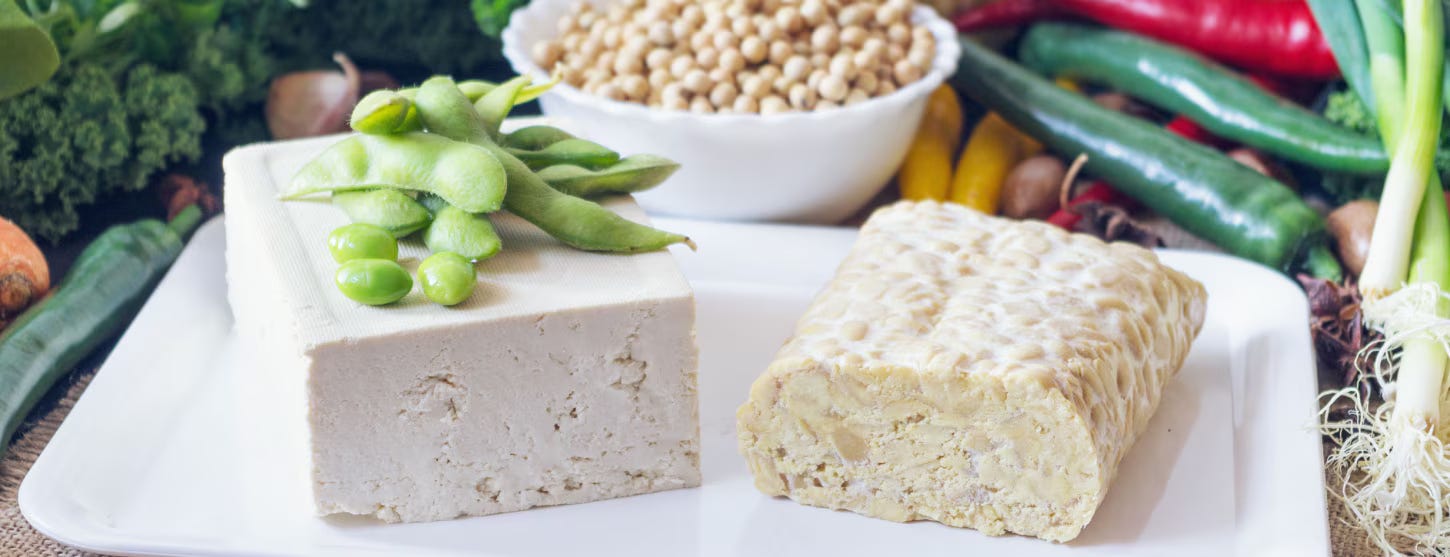
Both tofu and tempeh have a strong soy flavor, which might not be appealing to every eater. Fortunately for us, there is so much nutritional and culinary diversity in the world of plant based proteins! For vegetarians, vegans, and flexitarians—people who eat a semi-vegetarian diet—beans are often a major dietary staple, since they are high in protein and fiber, shelf-stable, affordable, and easy to prepare. There are thousands of bean varieties to satisfy even the pickiest of eaters.
“Pinto the Future”
A poem about beans, by our lovely friend ChatGPT:
In the garden, wide and green,
Grows the humble navy bean.
Black beans pack a hearty bite,
While pinto beans grow with delight.
Kidney beans in crimson hue,
With cannellini shining through.
The lima whispers, soft and sweet,
Next to adzuki, a tiny treat.
Chickpeas, round with golden glow,
Make hummus smooth, or stew to show.
Fava beans, so big and bold,
Share secrets from the days of old.
The lentil crew, both red and green,
So versatile, they fit any scene.
Mung beans sprout with tender care,
While soybeans stretch beyond compare.
Let’s not forget the black-eyed pea,
For luck, it’s eaten joyfully.
Butter beans and great northerns too,
Each one brings a taste that’s new.
From soups to stews and chili dreams,
Legumes fulfill all veggie schemes.
A world of protein, rich and keen,
All hail the mighty, magic bean!
Beyond beans, other substantial plant-based proteins include nuts like almonds, peanuts, and cashews; chia, hemp, flax, and pumpkin seeds; and protein powders, many of which have soy protein. And remember—just because something is a plant doesn’t mean it’s automatically a fruit or a vegetable! Many grains also have high protein content, like quinoa and oats.
While whole food plant-based proteins are amazing, many people struggle to give up the sensory experience of eating meat. That’s where meat mimics come in!
Meat Mimics
Meat mimics are proteins that recapitulate the experience of eating meat through texture, appearance, taste, and aroma. Meat mimics can be homemade or commercially produced; you may have heard of seitan (pronounced “say-tan”), a plant-based protein growing in popularity made from wheat gluten. Another popular homemade meat mimic is pulled jackfruit, which looks and tastes very similar to pulled or barbecued meat when tossed in the right sauce.


If you’re interested in eating plant-based meat or animal mimics, you don’t have to go full caveman and make them yourself; there are plenty of options at the grocery store. Animal product mimics like Just Egg, a scrambled egg replacement, are readily available, not to mention the plethora of plant-based milk (almond, coconut, soy, macadamia nut, and rice, just to name a few), yogurt, and cheese mimics lining the aisles of the dairy section.
The most prominent meat mimics on the market are Beyond Meat, Impossible Meat, and Quorn (which is a special case for us Trash Talkers—I’m saving Quorn for another post).
Beyond Meat, founded in 2009, sells plant-based meats including burgers, meatballs, steak tips, sausages, and ground chicken products. The main plant proteins in these meat mimics are peas, lentils, and beans. They make a pretty remarkable burger.
What makes this meat mimic better than a bean burger or a veggie burger? It actually tastes like meat. Humans are exceptionally good at detecting small differences between food products, especially foods that we eat often and in large quantities, like meat. We’re sensitive to small changes in texture, taste, and appearance, and veggie burgers just don’t do the trick most of the time. While the taste and texture experience of Beyond Meat isn’t 100% the same as real meat (they have a pretty distinct nutty flavor), I’d have no problem eating a Beyond Burger any day of the week. They look spot on, though.
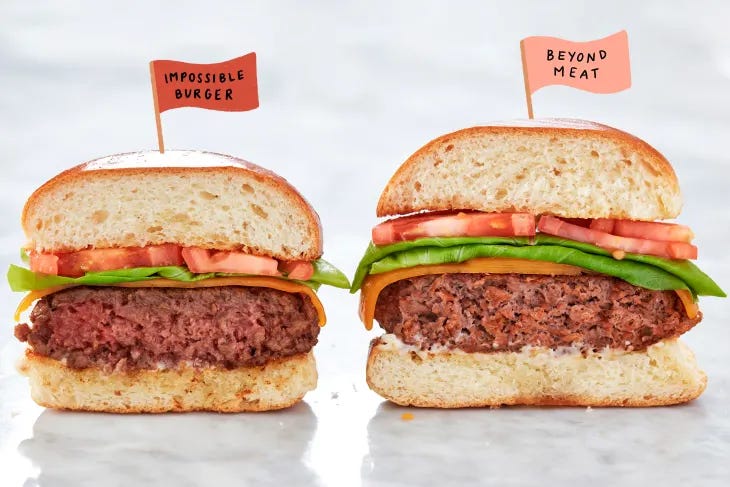
Impossible Meat makes very similar products but with one key distinction. Like Beyond Meat, Impossible Foods makes many ground meat products like burgers, sausages, meatballs, chicken nuggets, and even prepared meals. Impossible Meat products have soy and potato proteins; like most soy products, they have a pretty strong soy flavor that can be off-putting for many customers. The strong flavor soy imparts is a common challenge for plant-based products across the board.
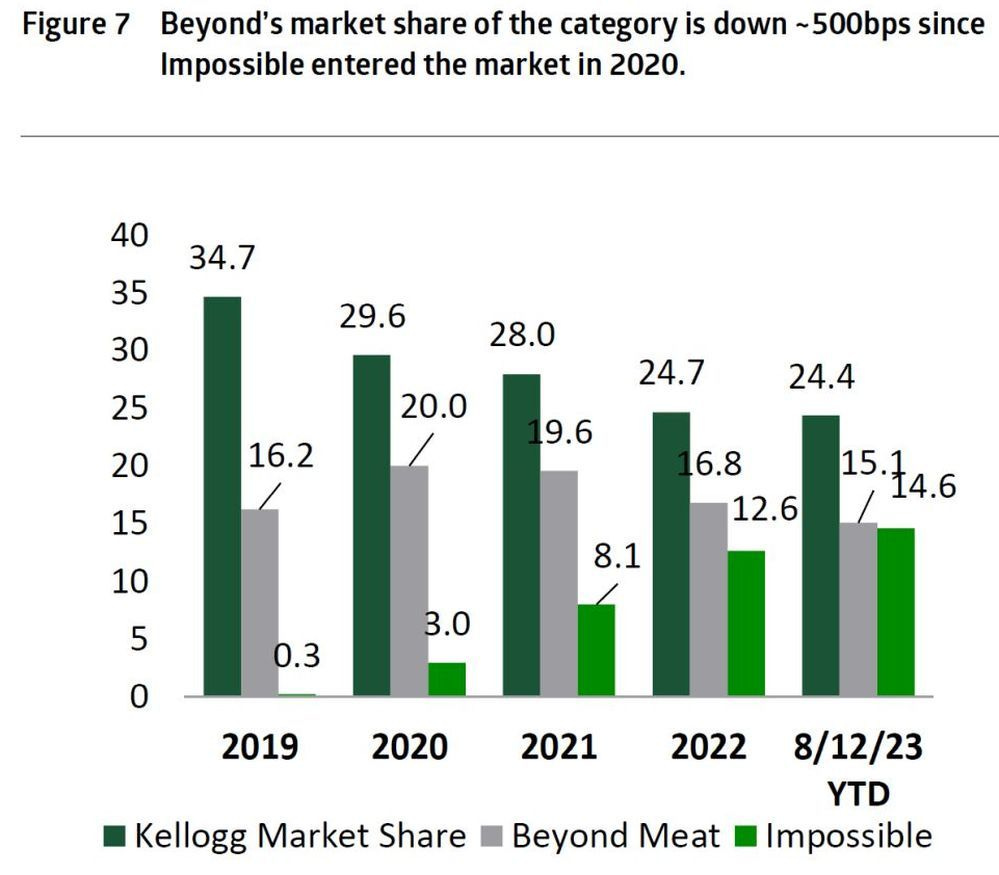
These two products target the same audience, but market research suggests Impossible Meat is taking more and more of the plant-based meat market. Initially, that was due to a simple price difference—Impossible Meat was cheaper on product launch. In response, Beyond Meat decreased their price to stay competitive, but consumers often still chose Impossible Meat. Both companies have presence in commercial products, too, like the Impossible Whopper from Burger King and KFC’s Beyond Fried Chicken. In late 2023, their market shares were almost equal.
Why do people like Impossible Meat? Let’s talk about heme.
Impossible Meat has a distinct, bloody, umami flavor that Beyond Meat is arguably lacking. This bloody flavor does a better job of imitating traditional meat, which is essential to influence consumers to choose a plant-based meat over an animal-based one. A compound called heme (think hemoglobin, the iron-containing oxygen carrier in our blood) gives rise to this unique savory taste and aroma. Plant cells contain small amounts of heme, but not nearly enough to impart a meaty flavor; how does Impossible Foods do it?
The answer is a pretty amazing biotechnological feat, starting with DNA. DNA contains special, detailed instructions that tell cells how to make proteins, including hemoglobin, which contains four hemes per protein unit. Scientists at Impossible Foods isolated the portion of DNA that contains the instructions for making heme, generally called a plasmid, and gave that plasmid to a yeast cell (actually, millions of yeast cells). The yeast picks up the plasmid and starts making heme, which they can later harvest and use in their plant-based meat products. The original source of the heme DNA is actually a soybean—once again, beans to the rescue!
Soy Long & Farewell
Plant-based proteins will continue to evolve as consumer needs and preferences change. If you’re a meat eater looking to diversify your diet with some added plants, take a crack at making jackfruit “pulled-pork,” seitan deli meat, or fried tofu. And if that sounds like biting off more than you can chew, ready-to-eat proteins like Impossible Meat, Beyond Meat, and many other plant-based brands have you covered.
A Strange Aside on Beans
Famous mathematician Pythagoras (as in, the Pythagorean theorem for right triangles) was a vegetarian who refrained from eating beans, for he feared their chewy and fibrous texture was too similar to that of human flesh. Some records say he believed that beans contained the human spirit, and consuming them would thus be cannibalism.
According to a record originating from Greek historian Neanthes, his fear of beans was so intense that it led to his death. While fleeing a violent attack at a meeting with his followers, he came to a field of fava beans and, rather than run through it to escape his captors, stopped running.
He was captured and killed at the foot of the bean field.
Note, there are contradictory records detailing his death—he may not have died because of beans (and for the sake of the field of mathematics, I sincerely hope he did not).

So. Have you eaten a bean?
Pythagoras be like, "Do not want.".
Great post! Loved the title, learned why I like Impossible burgers much more than Beyond Meat, and loved the Pythagoras bean stories, too! I’m going to pepper my thanksgiving guests with these tidbits!