


Jack of All Trades, Master of None
Well, not really all trades. But a decent handful.
Now, I’m a recent college graduate studying for my Ph.D. in Food Science at Penn State; but let’s go back a little further.
1. Washed-Up Athlete
Before I used “scientist” as a label, I was a competitive travel softball player for 10 years in the Mid-Atlantic region. Though I had a bit of an unconventional build for an athlete, I brought precise decision-making and consistency to the field. I primarily played shortstop (though I stand 6' tall), but grew to enjoy playing almost all positions in the later stages of my career.
I say washed-up because it is deathly embarrassing to think about my capabilities on the field after being away from softball for 6 years and counting. I earned my fair share of shiny trophies, but nothing compares to the friendships and competitive spirit softball gifted me. I left the sport near the end of high school to apply to college and work part-time at a local pie shop, but I’ll always love softball.
2. Interdisciplinary Student
A permanent part of my identity. I went to college at Lehigh University in Bethlehem, PA, where I studied in the Integrated Degree in Engineering, Arts and Sciences (IDEAS) honors program. IDEAS students design their own intercollegiate course of study and take eight discussion-based engineering ethics seminars throughout their degree.
An incredible opportunity, the IDEAS program gave me the freedom to explore my interests without the restrictions of a traditional major like biological sciences or chemical engineering, though I took courses that aligned very closely with those majors. I was able to integrate knowledge across diverse fields while still building a foundation in disciplines like molecular biology, environmental science, chemical engineering, and electrical engineering.
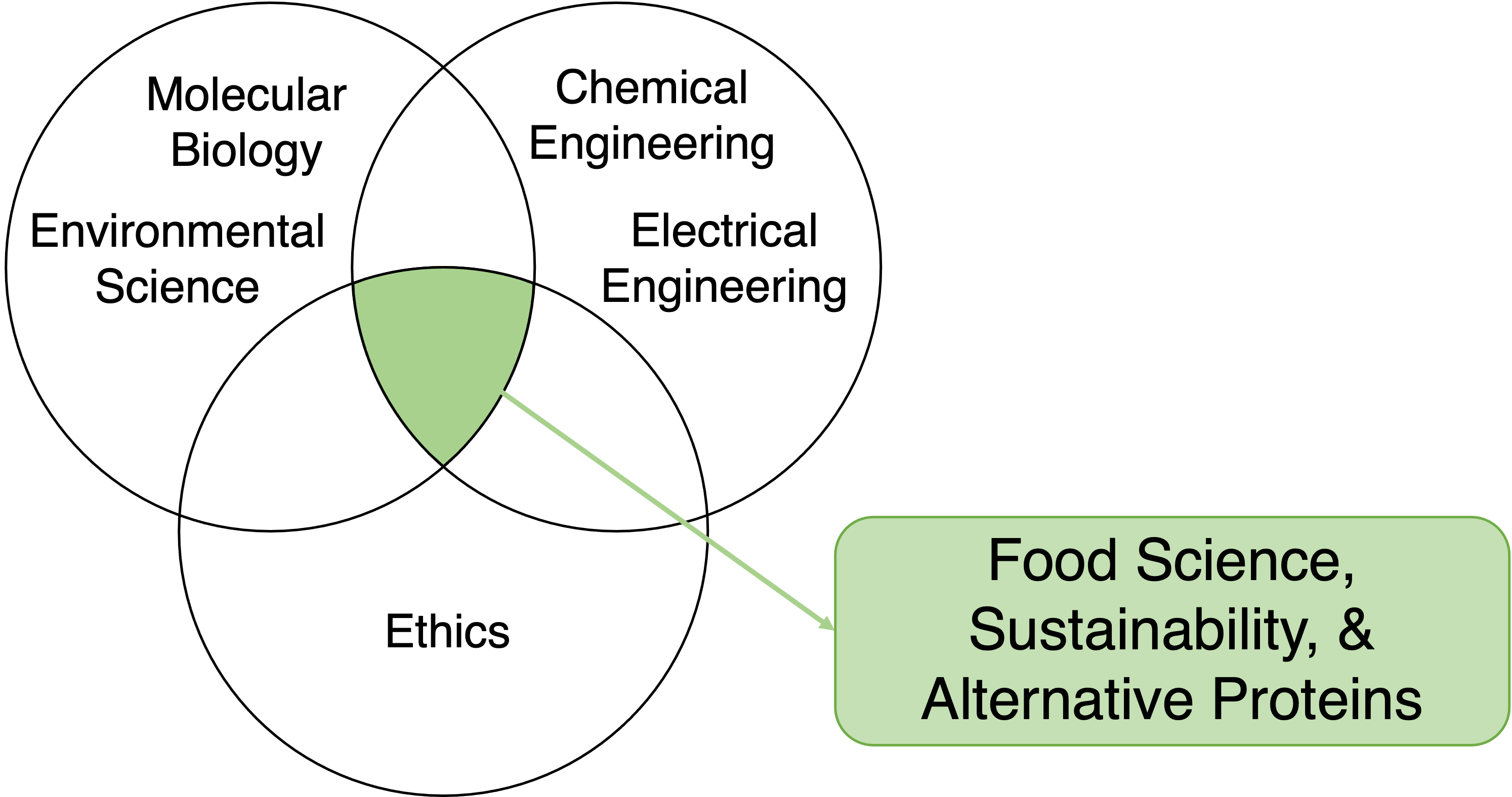
In the later stages of the IDEAS degree, students identify a theme encompassing their coursework; my IDEAS coursework and research experience led me to the theme of “Food Science, Sustainability, & Alternative Proteins.” I ultimately earned my B.S. in Integrated Natural Science and Engineering before starting graduate school at Penn State.
3. Alternative Protein Researcher
While at Lehigh (and still at Penn State), I joined a cultivated meat research project in the Department of Chemical and Biomolecular Engineering. Cultivated meat, or meat grown from cells, is a novel food with a smaller environmental footprint compared to conventionally farmed-proteins like beef, pork, chicken, and seafood. Cultivated meat also has public health benefits like controlling the spread of disease and managing antibiotic resistance, and it addresses ethical issues in industrial farming practices.
My work is in developing “scaffolds” for cultivated meat. Scaffolds are supportive structures (semi-solid hydrogels like gelatin, small carrier particles, or even fungal mycelium) that help cells grow and differentiate into muscle, fat, and connective tissue (all parts of meat!). More about this later.
My research in cultivated meat and my passion for sustainability led me to the alt protein space, which broadly includes plant-based protein, fermented protein, cultivated protein, insect protein, and even molecular farming. Alternative proteins are opportunities to add resilience to our food system since their growth isn’t reliant on arable land, and they can help feed our rapidly-growing global population with more resource efficiency than conventional agriculture.
Being in alt protein is exciting because most products are very, very new, and the field is evolving fast. Plant-based products have carved out a dedicated space in the food market in the last 10-15 years; most people are familiar with what they’re made of and what they taste like. Quorn, a fermented protein, is about 40 years old, but new fermented products like Spirulina are still popping up. Cultivated proteins are the newest—only about 10 years old, and only recently FDA-approved in 2023!
4. Keeb Enthusiast
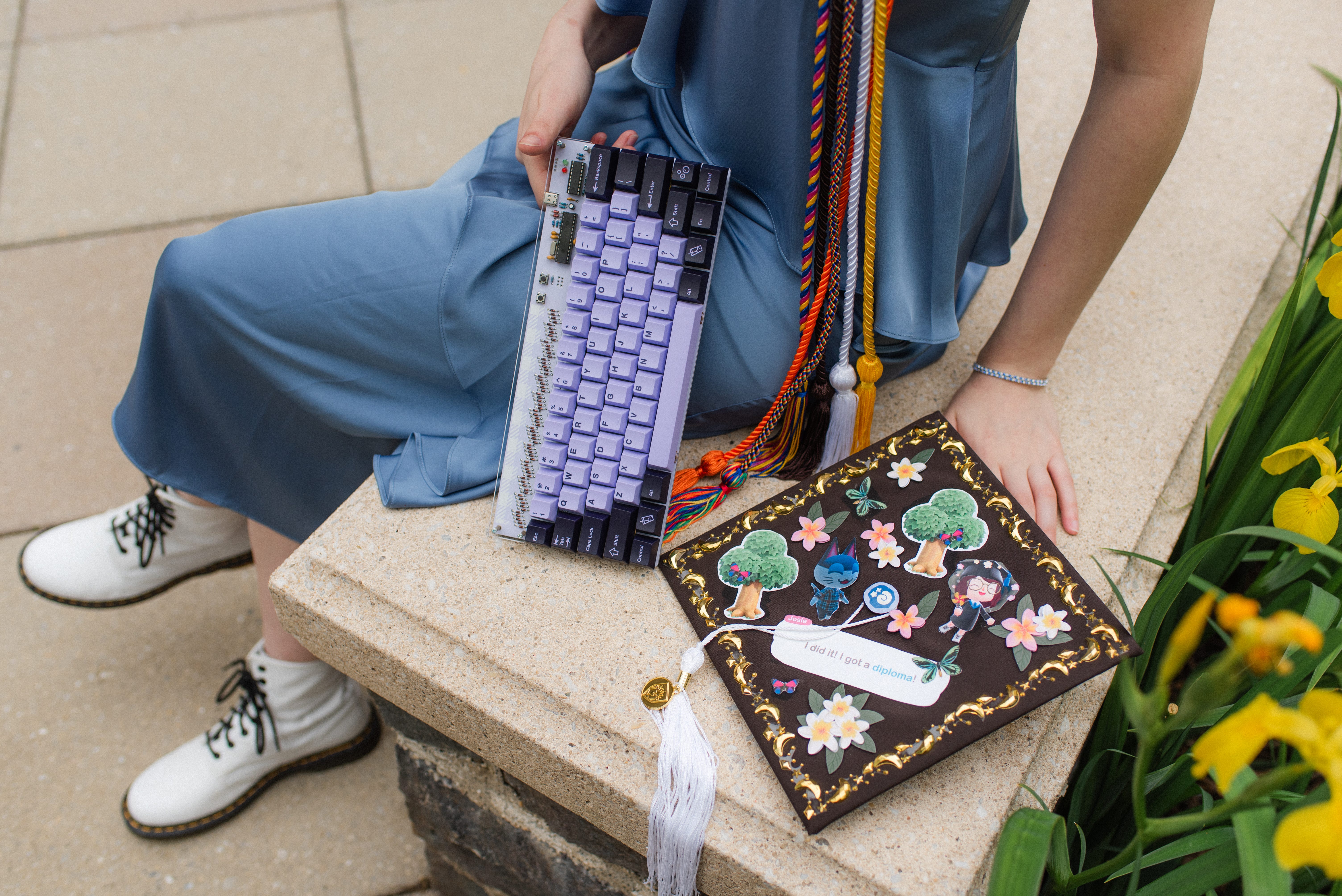
I’ve always loved playing video games, but in the last five years I fell deep into the rabbit hole of building custom mechanical keyboards (keebs) after I bought my first PC. When you go custom, you have full freedom over color and design, sound, and material type of your keyboard. From the hobby, I learned to solder and have slowly developed an eye for design, though I’m still learning how to pick keyboard parts and tune them for a specific typing sound and feel.
Though it may require some trial and error to figure out what typing sound and feel you enjoy, know that there are endless options out there! The community has been steady growing (over 1 million members on r/mechanicalkeyboards), and, thankfully, prices for parts have decreased significantly since the pandemic. As of October 2024, I have three boards built: Gingham60 Picnic Edition with Kiwi switches and Cherry Taro keycaps; Neo80 in Navy with Durock Lotus switches and GMK Rudy keycaps; and a GMMK Pro in White Ice with Zealios v2 switches and MiTo Pegaso keycaps. I’ve got another in the works—lots and lots of more keyboard content coming!

But Better Than a Master of One!
I’m someone who enjoys diverse hobbies and experiences, spanning arts and crafts, food and food technology, science culture, and a whole lot more. Whether you’re here for the science, to learn about sustainability, or just a bit of grad school camaraderie, I’m excited to share my experiences with you!
Awesome post! It’s cool to read about your experiences with playing travel softball and being part of the IDEAS program at Lehigh. I’m excited to hear more about Quorn and Keebs!